WEBSITES & DIGITAL PRESENCE

Giving research projects the digital presence they deserve

A research website should do more than look good. It should make complex work understandable, organise resources clearly and sustainably, and allow different audiences to find the content intended for them.

Expressum designs bespoke websites for researchers, research projects, authors, museums and heritage organisations, combining information architecture, editorial design, bilingual content and web development.

Each project is conceived for the long term: from defining the structure of the site to launch, and, where required, to maintenance, evolution and the long-term preservation of its content.
WHAT A WEBSITE SHOULD ACHIEVE

Organise, explain and make research accessible

Before choosing a layout or a technology, it is essential to understand what the website needs to do: present a project, organise resources, showcase publications, document research, communicate with different audiences or build a digital presence designed to evolve over several years.

  • Structure information
    Build a clear architecture that makes it easy to navigate scientific content that may be complex or extensive.
  • Establish clear priorities
    Give each piece of information the right place and prevent a research website from becoming a simple accumulation of pages and documents.
  • Adapt content to different audiences
    Balance scholarly rigour, readability and interpretation for researchers, students, institutional partners and non-specialist visitors.
  • Work across languages
    Design the architecture from the outset for bilingual or multilingual content, rather than treating translation as a late addition.
  • Integrate complex resources
    Interactive maps, archives, bibliographies, itineraries, documents, galleries, publications and other resources can be integrated into the overall editorial structure.
  • Plan for the future
    Anticipate maintenance, future development, transfer of access and, where necessary, the long-term preservation of scholarly content.
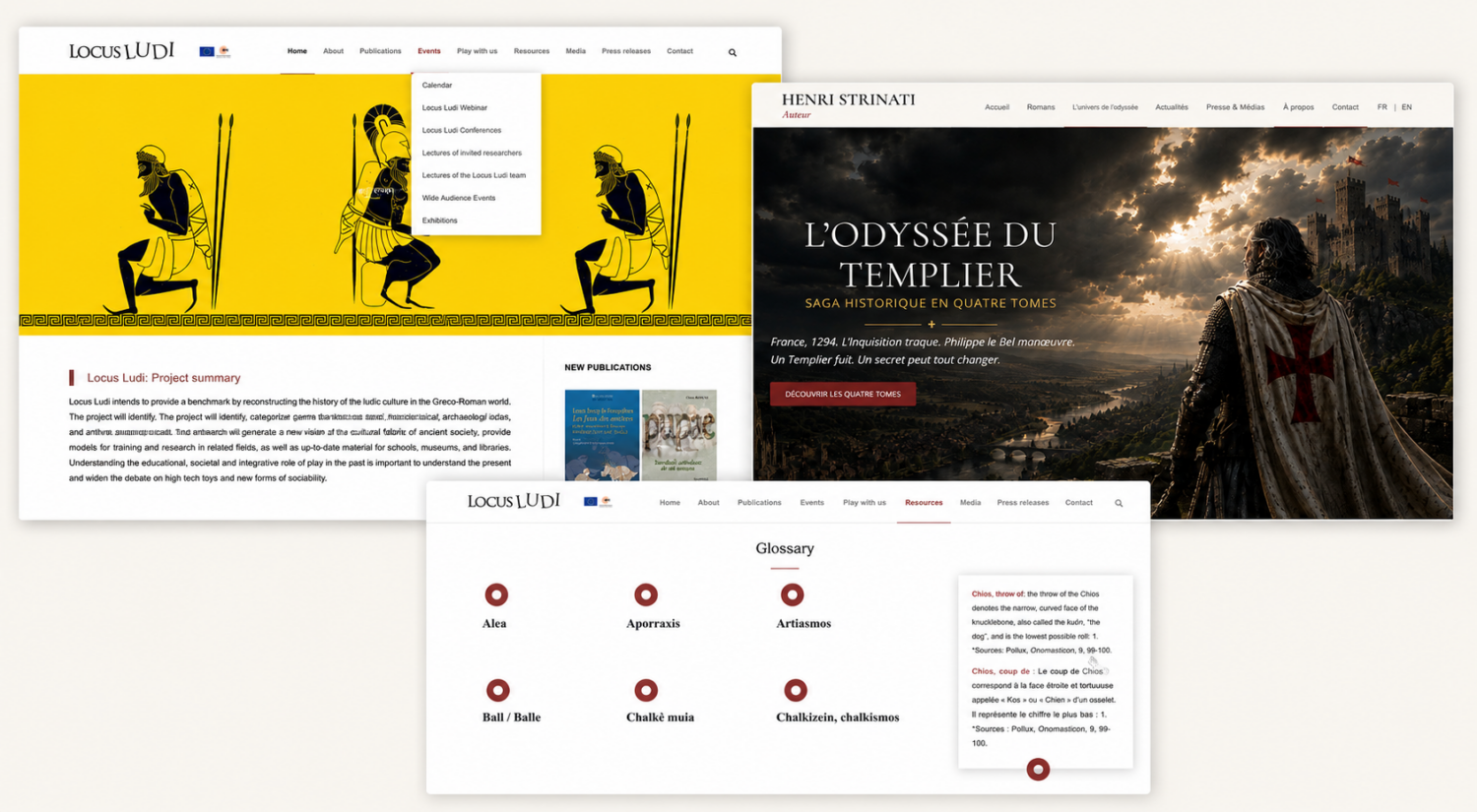
Examples of websites designed by Expressum for Locus Ludi and Henri Strinati

SELECTED WORK

Very different websites, each built around its content

Locus Ludi — ERC Advanced Grant

Design, development and maintenance of a substantial research-project website devoted to play in Antiquity, bringing together documentary architecture, publications, news, scholarly resources and content for different audiences.

Part of the material was later transferred to Hypothèses to support its long-term preservation within a durable academic environment.

→ View project

Henri Strinati — Author Website

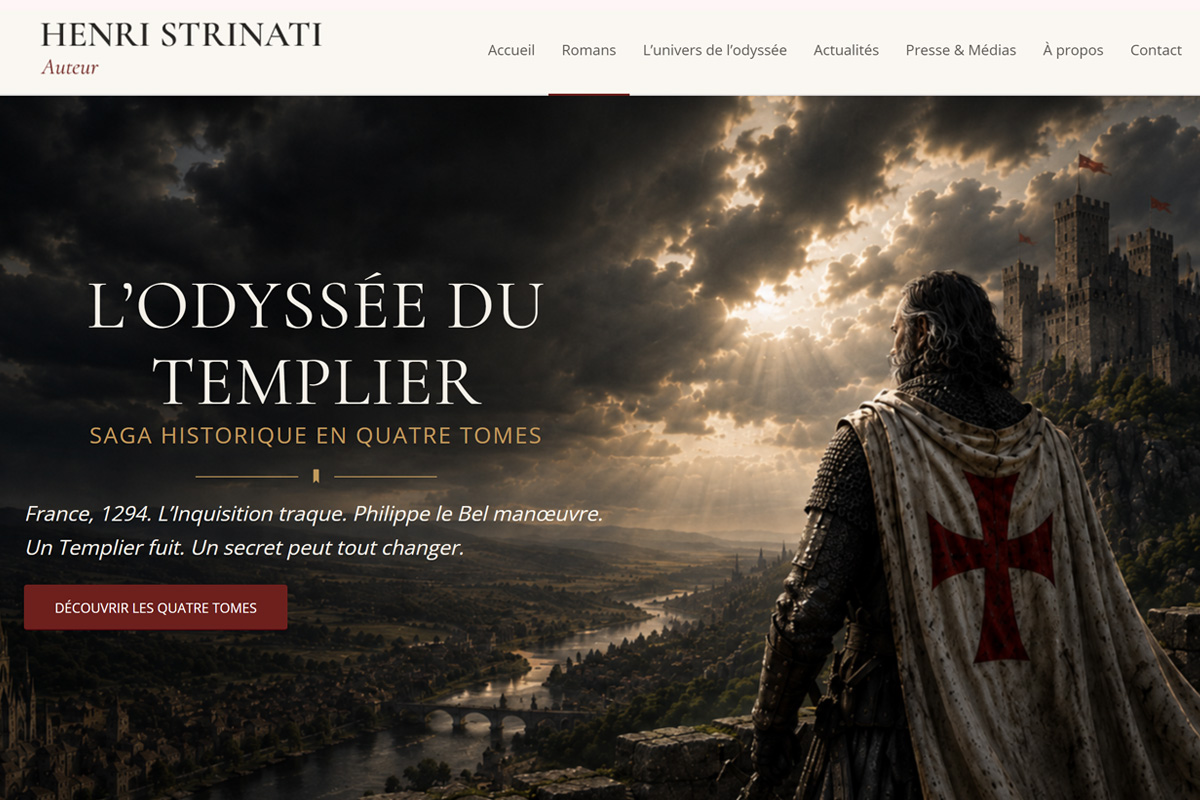
Design of a bilingual author website aimed both at French-speaking readers and English-language publishing professionals, with editorial architecture, historical content, interactive maps and itineraries, documentary archives and resources devoted to the world of the novels.

→ View the project

Over 40 websites created

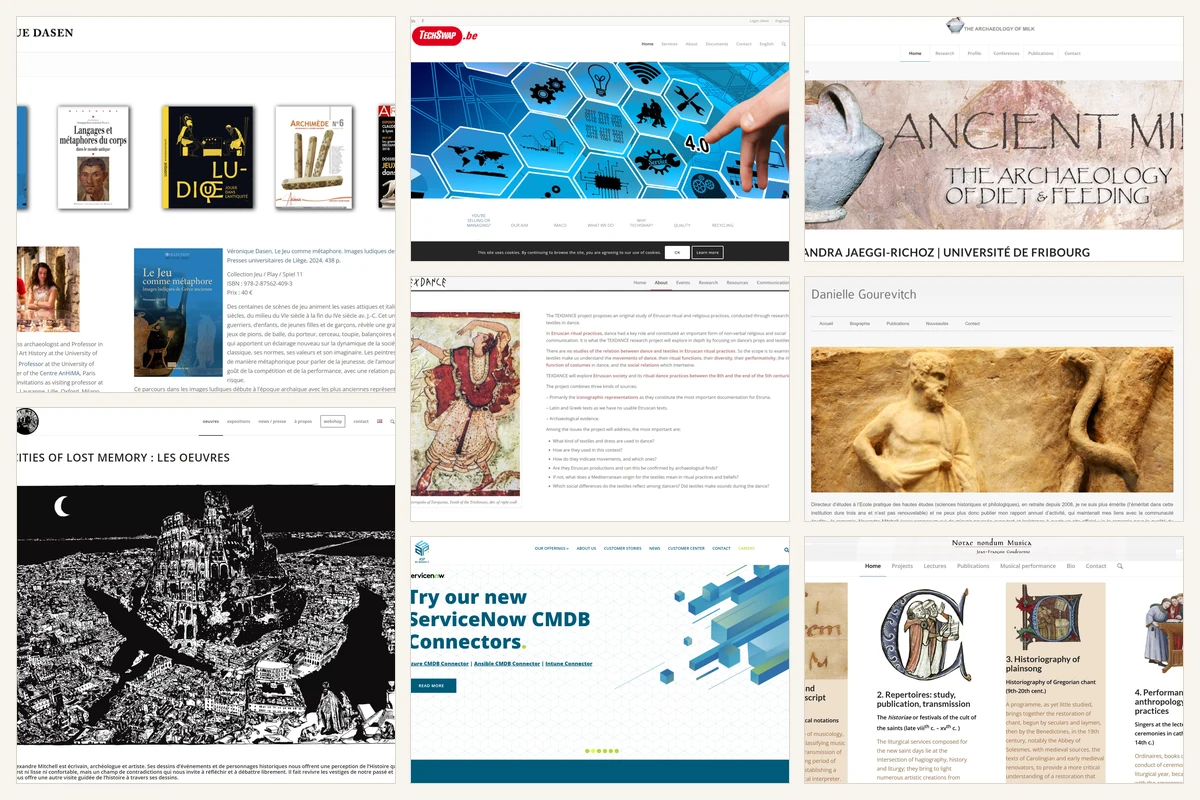
Experience gained through work with researchers, research projects, authors and organisations with very different needs: institutional websites, international projects, publications, documentary resources, bilingual communication and long-term digital presence.

A website is never just a showcase.
Its structure, content, tools and technical environment should serve the project that gave rise to it — and continue to do so long after launch.

SUSTAINABLE TECHNICAL CHOICES

Websites designed to last — and remain in their owners’ hands

Expressum favours proven, widely used and sufficiently open solutions that allow a website to evolve over many years. The aim is not simply to deliver a functioning site, but to build a digital environment over which the client retains genuine control.

  • WordPress
    Except where a project is intended for a scholarly platform such as Hypothèses, websites are generally developed in WordPress, a widely used environment that allows content to evolve without dependence on a single provider.
  • European hosting
    Expressum generally favours OVHcloud for domain names and hosting: an established European provider with substantial infrastructure suited to projects intended to last.
  • Enfold
    WordPress websites are primarily developed with Enfold, distributed through ThemeForest. Its flexibility, large user community and extensive resources make it possible to create very different websites within a proven and maintainable technical environment.
  • Accounts in the client’s name
    Domain names, hosting, licences and external services are created directly in the client’s name wherever possible. Expressum assists with setting up and configuring the necessary accounts — OVHcloud, ThemeForest, Mailchimp or other services used by the project.
  • Necessary access, without dependency
    Expressum naturally retains the technical access required for development and maintenance and may, for example, be registered as a technical contact with the hosting provider. The client nevertheless remains the account holder and also retains all essential access credentials.
  • Hypothèses where appropriate
    For some research projects, Hypothèses may provide a complementary or alternative solution, particularly where the long-term preservation of scholarly content and its integration into a durable academic environment are priorities.

No dependency on the provider.
If the collaboration with Expressum were ever to end, for whatever reason, another professional should be able to take over the project immediately. The website, its accounts, licences and infrastructure remain under the client’s control.

A COLLABORATIVE WORKING METHOD

From the initial project to a living, sustainable website

Creating a website begins well before technical development. It requires an understanding of the project, its content, its audiences and how it may evolve in the future. The work then develops in stages, through regular exchanges, successive versions and testing across different devices until launch.

01 — Understand

Understand the project

Initial meetings to define the aims of the website, its audiences, the content already available and what still needs to be produced. This phase also helps anticipate future requirements and any particular constraints.

02 — Build

Build the architecture

Organisation of sections, prioritisation of content and definition of the main navigation paths. Where the project is bilingual or includes complex resources, their integration is planned from this stage.

03 — Develop

Develop, test and refine

Progressive development of the site, integration of content and regular exchanges with the client. Pages are adjusted in response to feedback and tested on desktop, tablet and mobile to ensure a coherent experience across different screen sizes.

04 — Launch

Launch and support

Final configuration, launch and technical checks. Expressum can then provide maintenance, updates and further development while ensuring that the client retains access to and control over the digital environment.

A website or digital-presence project?

Research website, author website, bilingual project, interactive resources or redesign of an existing site: tell us about your project, its content and its objectives. We will propose an approach designed to last and remain under your control.